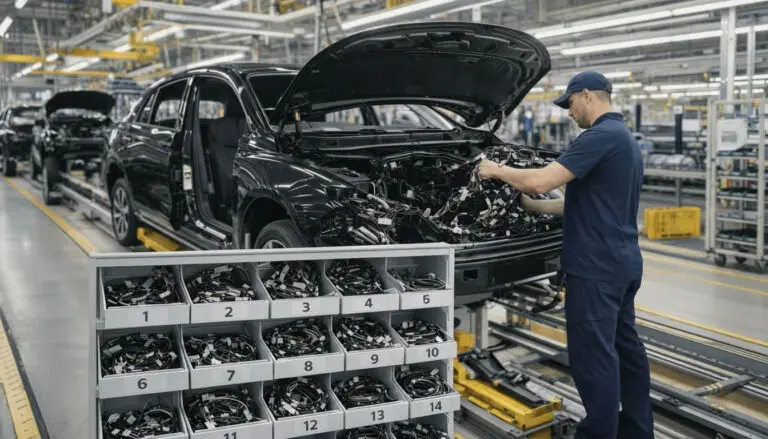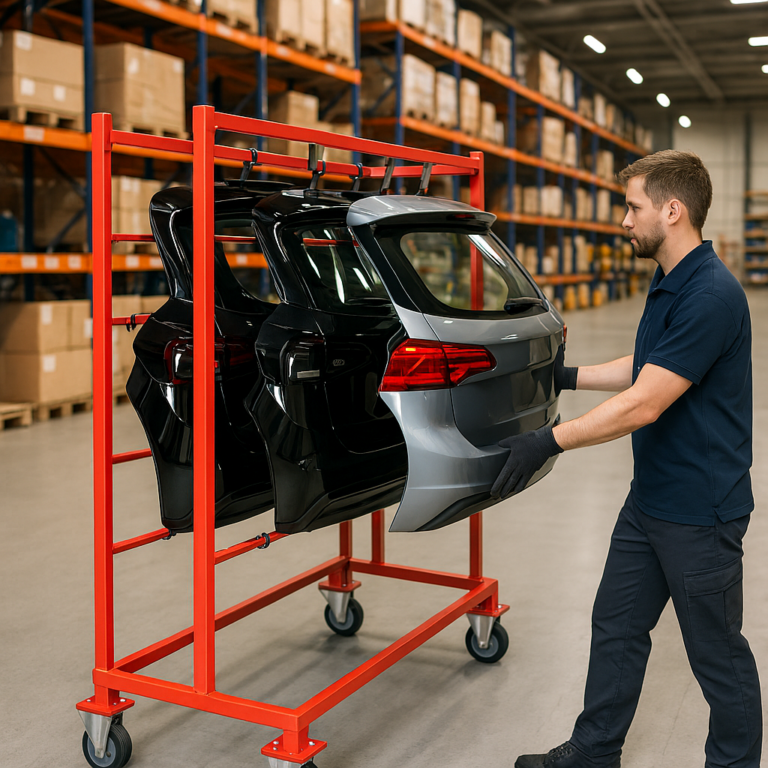

Production logistics is complex. Variant diversity, tight cycles, and high delivery accuracy characterize the processes. Sequencing software ensures that parts are delivered exactly in the order in which they are assembled. It digitally maps all relevant processes and ensures stable, transparent, and efficient production supply.
Keyfacts
- Digital mapping of all JIS processes
- Real-time data for inventory and sequences
- Flexible sequencing strategies for different requirements
- Scalable architecture for growing production volumes
- Integration with existing ERP and WMS systems
Why is sequencing software indispensable in production logistics?
Just-in-Sequence means: parts must be delivered exactly in the order in which they are assembled. Without digital support, risks such as delays, high inventories, and incorrect sequences arise. Sequencing software for JIS in logistics automates sequence creation, checks data consistency, and ensures production-synchronous supply. Companies benefit from fewer downtimes and higher process reliability.
What features must modern sequencing software offer?
A powerful solution covers all core processes:
- Receipt and processing of call-off data via interfaces
- Automatic creation of sequence orders based on templates
- Validation of item, index, and batch for error-free processes
- Quality assurance before loading
- Real-time analytics for inventory and KPIs
Additionally, flexible sequencing strategies such as reversed order or route optimization are crucial to meet different production requirements.
What are the benefits of sequencing software for JIS in logistics?
The advantages are clear:
- Transparency through real-time dashboards
- Flexibility thanks to modular extensions and interfaces
- Efficiency through automated processes and fewer manual interventions
- Scalability for different production volumes
- Cost control through fair pricing models and reduced ramp-up costs